
Ayesha Latif
Book Review
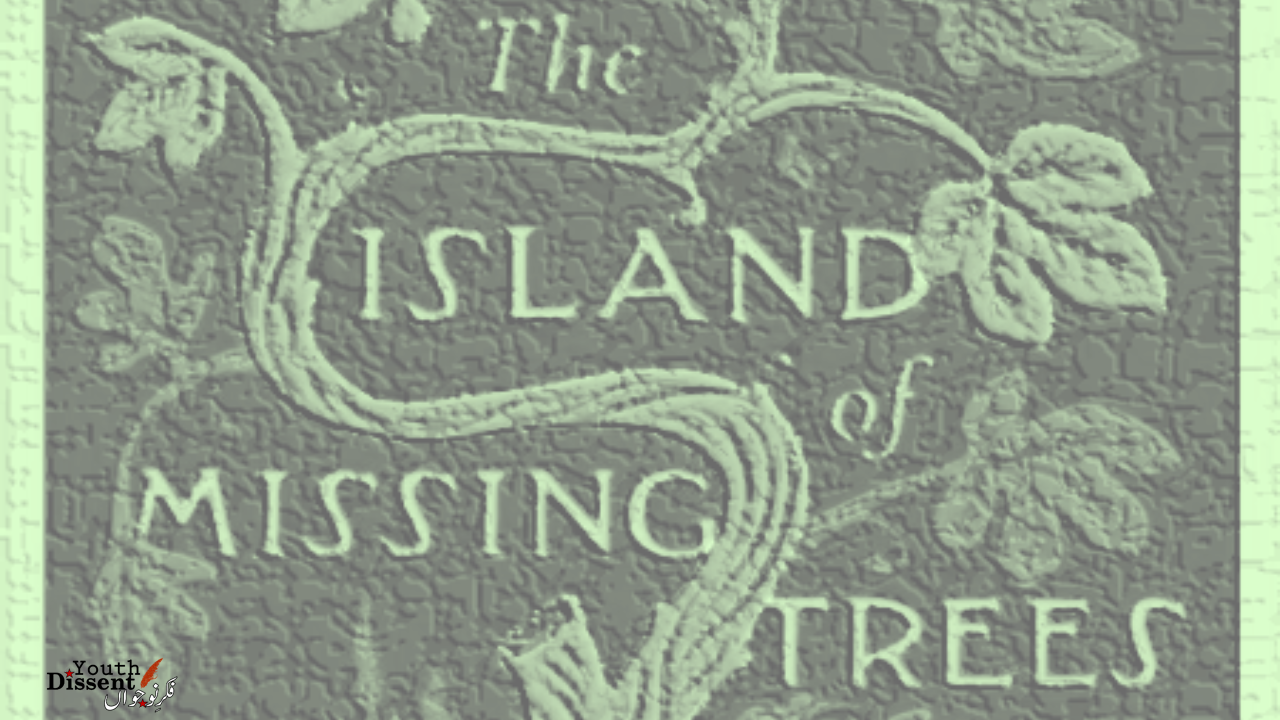
“The Island of Missing Trees“ -Elif Shafak
No of Pages: 368
Publication: 2021
Elif Shafak’s most recent book, The Island of Missing Trees, published just recently, is a brilliant novel that can be read as a eulogy to nature. The author much known for her writing The Forty-Rules of Love seems to have expanded her interest to include ecology as an area of concern. The first part begins with a description of a rather peculiar scene. A Ficus tree is being buried to protect it from the onslaught of cold London winters only to be restored and replanted in the spring season. In a chapter titled ” How to Bury a Fig Tree in Ten Steps”, Shafak describes in a guideline like almost prescriptive order, the step-by-step process of burying the tree. The tree is significant to the plot; it appears as an actual character and is only one of the immigrants from Nicosia to its new turf in England. The other immigrants include the male protagonist, Kostas who is grieving his wife Defne’s untimely death. Kostas is a botanist by passion and profession, one of the central characters, whose story is unveiled bit by bit. The narrative charts Kostas and Defne’s traumatic past which is central as the romantic-love story. Running parallel in the plot is Kostas’s ongoing dwindling relationship with his teenage daughter, Ada, meaning ‘island’ in Greek. Manifest throughout the narrative is how dislocations and migrations from turfs and territories affect all living beings both humans and non-humans, and for some, if not for all, it is fraught by memories and guilt.
Defne’s sad story hovers over the plot and makes way for the author to ponder over human dispositions and temperaments. Through Defne, the character named after Daphne the Greek mythological tree, Shafak attempts at tracing answers into human psyche and nature by questioning if the human lot can be generally characterized into two categories, some as optimistic and others as pessimistic. Interestingly, this strengthens the introspectiveness or philosophical bent in the narrative without making it sound presumptuous. Elif Shafak connects the human individual psyche with that of the collective traumas to suggest how generations are wedded through pain and sufferings, and that immigrations and forced displacements create scars that are deeper than they appear. The ones massacred or killed brutally do not get erased from memories of their loved ones, and so in a way memory is a terrible curse to those who carry it as a burden. This is where the history of the Greece- Cyprus riots (1974) is evoked, detailed parts of which are taken from real-life events and fictionalized to merge in the plot. With each belonging to a different ethnic and religious identity, Kostas and Defne had rebelled against their families, which is revealed in retrospect. As their past unveils, Shafak complements the plot with another tragic tale of love between a gay couple. Just when ethnic and religious violence mars the landscape, the incidents on the island of Nicosia take a gory turn. Their tragic love story remains buried as much had remained buried under the debris of the past. The Ficus in a way becomes the driving force of the novel. These stories on the island could only be captured by the Ficus tree, a silent witness, to the passage of events. The Ficus tree bears witness to the life of various communities; it records the traumas and travails of the disputed lands and peoples of Greece and Turkey.
In some of the best parts of the novel, Shafak brings ecological aesthetics mentioning glorious trees from across the world, Acacia, Cherry, Beech, Myrtle, and the list goes on to inspire a profound sense of respect for the arboreal life cycle. Perhaps the idea is to break the dualistic ontological categorizations that have produced far too many dualisms: nature and culture, men and women, rationality and emotion, self and other. Shafak’s activism for the world of nature, all plant and animal species, advocates how our frames of thinking, acting, and relating to those living around us must change. Possibly a symbiosis with the natural world will help us attain the equilibrium we have otherwise totally lost in the present.
The ecology theme has a tendency to overshadow her narrative, but to nature lovers, the descriptions of the animal kingdom and plant types are the most lyrical and profound sections of the book. Overall, the book is a homage to the natural world as a source of beauty, resilience, and strength. In addition, it is a joy to encounter allusions to magnificent women writers in Elif Shafak’s work. She mentions the fiercely independent teenage character Ada reading I am Malala, and The Bell Jar. The development of Miriam and Ada’s bond adds pleasant tension to the text. Though there are moments of partial information, and bits in the story that remain unsaid, or unexamined, however, once again Elif’s writing validates her position as the most readable of contemporary writers. Overall this most recent work inspires new conversations about the natural world, human memory, and humanity’s place in the cycle of life.